

Bernedoodle Basics
Welcome, We are always happy to talk about dogs.
Life Expectancy
The Bernedoodle is believed to have an average life expectancy of 12 years, This is double the average life expectancy of the Bernese Mountain dog, One reason the Bernedoodle was started was to create genetically diverse, healthier dogs with all the loving, goofy, loyal traits we see and love the Bernese mountain dog for.
Poodles are used and chosen for hybrids because of their naturally low shedding dander and because a little bit of intelligence goes a long way.
Fur
First and fore most, NO dog, purebred or hybrid is 100% Hypoallergenic, This is false information!
Poodles and breeds like the Bichon, Briards and Portuguese water dog are considered Low allergy breeds, This is not because they do not moult, This is because they shed very low levels of dander, essentially skin cells, than most other breeds and this results in less allergic reactions.
Dander not Fur is the problem, This has led to hybrid breeds surging in popularity, Society as a whole is more sensitive to allergens than ever before, Breeders carefully select their dogs using DNA screens and coat analysis to indicate low shedding dogs, Lowering the risk significantly of them triggering allergic reactions.
Even a poodle's test will return a Low Shedding result from their screening and that is expected.
Potential owners should always take preventative measures, Visit the dogs to see if you have a reaction, Remember a litter is 10 times a single dog, However if you experience itchy eyes, itchy skin you may require antihistamine treatment for the first few weeks while you adjust to a dog being in your environment, Any reaction greater than this is a clear indication that unfortunately this litter is not for you, It does not necessarily mean Bernedoodle's are not for you, You should proceed with caution.

Standard
Miniature
Toy
There is no breed standard and so there can be discrepancies in size, This can only be taken as a guide.
Weight - 23 to 45 kg
Height - 23 to 29 inch
This is the largest of the Bernedoodle's and the reach full size between 18 - 24 months, They are slowest to mature.
Bernedoodle's do not require large gardens because they are very adaptable and as long as you provide a daily walk they are quite content.
There is no breed standard and so there can be discrepancies in size, This can only be taken as a guide.
Weight - 9 to 20 kg
Height - 18 to 22 inch
A miniature is technically a medium sized dog, The reach adult weight by 12-16 months.
When choosing a Miniature always consider the weight and height of the dam and sire.
There is no breed standard and so there can be discrepancies in size, This can only be taken as a guide.
Weight - 9 to 11 kg
Height - 12 to 17 inch
Toy Bernedoodle's mature faster and reach adult weight by 8-12 months of age.
A first generation should ethically be conceived by AI Due to dramatic size difference and the dam should be the Bernese.
We are seeing the rise of sizes in-between but for myself a poodle comes in the three above and so I base my sizes accordingly, Anything in-between is a size to attract sales, As where do they come from?
What is an ultra?
Ultra simply put means a Bernedoodle with or more than 51% Bernese in their DNA, Due to the higher percentage of Bernese heritage they often develop the bulk/back muscle of the Bernese mountain dog , Their more prone to weight gain in general, They also tend to have beautiful abundant plush fur that is very light and soft textured.
Essentially an ultra will not be taller but could certainly be heavier by as much as 10kg than just a standard.
F1, F1B, F2 or Multi Gens
F1 is the first cross, One poodle dog bred to one Bernese dog.
F1b is the second cross, A F1 Bernedoodle bred back to a Poodle, When this is preformed in reverse and back to a Bernese and not a poodle, we call them an Ultra or reverse F1b.
F2 is the cross between two F1 dogs or 0ne F1 dog to an F1b dog.
Multi gen is the breeding of two F1b Bernedoodles together, OR Two Ultra's together. Essentially creating the 3rd cross.
Bernedoodle colours
The most popular colour Bernedoodle is a tricolour, Black, Rust and White the image of the typical Bernese mountain dog.
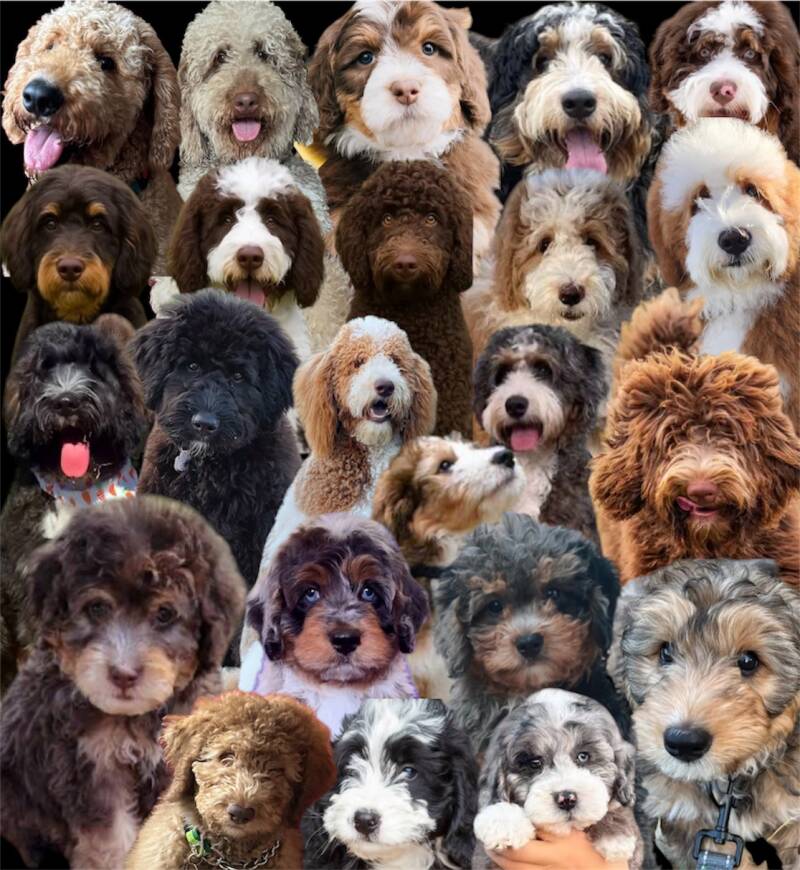
However because of their poodle heritage, Bernedoodle's come in vast spectrum of colours and patterns, Each just as beautiful.
I personally love anything in a chocolate colour and to breed consistent ultra type in the chocolate tricolour is my ambitious dream.
Any litter bred from an F1 to F1 or F1b mating sees the biggest variation in coat type and colours.
Sadly it appears some breeders are lacking basic knowledge or ignoring it and sables are being sold as brown or red, If the nose is black, the lips and or eye rims, The ears are dark and their is a dark strip over the spine then your puppy is sable.
Red puppies also have black noses, lips and eye rims if they are true red, Red can be a dark Apricot shade to rich red like an Irish setter, An Apricot or Cream would normally be black although brown is permitted but not idea when referring to a poodle breed standard, They are any shade of orange or lighter.
Where nose colour is faded, pink or liver (not brown) in tone there is a significant chance your puppy may fade, Coats can fade a little or completely wash out, Most often seen in F1b puppies but not exclusively.
White puppies should have black noses, lips and rims, They can be pink but before breeding a genetics test should be undertaken in some cases it may be just lack of pigment but not properly managed then it can lead to albino puppies, A pink nose can also be Vitiligo or caused by trauma.
Merle
Poodles are NOT naturally merle, Merle which can cause mottling or marbled coat patterns and the highly desirable blue eyes does not historically exist in the purebred gene pool.
Every merle poodle that you see today is the result of outcrossing, At some point in time a poodle would have been crossed with a breed where merle is naturally occurring, Such as an Australian shepherd, border collie or a sheltie.
All major authorities on breeds, there standards and heritage refuse to recognise Merle in poodles.
The health risks for Merles and Merle carriers, The primary danger with merle breeding is accidentally breeding with an unknown carrier, Bringing about the Double merle, This can lead to sight and hearing issues either from birth or as they age, They can be born completely deaf or blind and have serve allergies to veterinary medications.
I think the best way to put this is "Leave merle breeding to the professionals" or Extensively health test both dogs and seek guidance from a knowledgeable source, I understand merle but I am NOT a merle expert!
Hernias
Both parent breeds, The Poodle and the Bernese mountain dog have umbilical hernias throughout linage, Even when a breeder takes every care to breed from unaffected dogs because this is ancestral heritage they can and do spontaneously show up, Most self heal and have no lasting detrimental affect to said puppies, Some may not heal and can require surgery when they are de-sexed, Bernedoodle breeders now void them from their inclusion i health guarantee because vets do not consider them life threatening or life limiting.
Other Health Considerations
Every breed has its unique set of health related conditions, Some far more serious than others, For the most part hybrid cross breeds have a tendency to be generally healthier, The most significant issues I have seen been talked about:
Sensitive Stomachs: While in their younger months digestive sensitivities lead to soft and sometimes watery stools, This usually passes by 4-6 months and can be managed with pumpkin powder added to their meal, Avoidance of chicken products, Any dietary changes been undertaken very slowly.
If their is bright blood or the stool is consistently mucus in texture then consult your vet as soon as possible, Unfortunately this type of dietary sensitivity occurs more than breeders would like across many breeds of dog but with timely management it can be treated and the puppy has no negative long term affects.
Allergies: Environmental or food allergies this ties in with the fore mentioned above, It has been noted that just as we are seeing a rise in human allergy suffers, The canine world is also, Speculation is that it comes down to environmental toxins, air quality and global warming.
Floppy eared breeds can all suffer with ear infections as their is reduced air flow around the ear, Maintain ears with regular wipeing with a cotton pad or ear wipe will help avoid problems caused by build up, Always dry them properly if they are bathed or get wet.
Black ear wax, smelly ears, red ear canals are all warning signs, Left untreated the ear can become very painful which leads to behaviour changes in the dog including snapping and growling when its touched, They can become chronic and in worst case scenarios the ear canal may need removing.
Hot spots: Due to their dense coats, can occasionally trap moisture against the skin and this is what leads to hot spots forming, Uncomfortable dermatitis that is itchy, scabby and can get very angry and spread if not treated promptly.
Grooming
Grooming is very important, If you have a short coated Bernedoodle, congratulations you have the easier coat to manage, A visit to the groomer every 10-12 weeks and regular brushing with a pinned brush or slicker brush is all you really need to do.
Wavy coats benefit from 8 weekly grooming, a weekly brush out and any knots found remove promptly, a rake for undercoat is also beneficial.
Curly coats, You need to brush often, two or three times a week, Professional groom 4-6 weeks, I prefer a long pinned brush but a slicker and comb is also fine, Those curls may feel soft and wonderful on the surface but the hair growth comes from underneath and problems can start before you even notice.
Don't underestimate the time and effort your groomer has to put in to clean and work through your dogs coat, it can take hours and groomers need a medal as it is physically a work out, If you don't want a shaved dog, Put the work in between grooms, There really is no alternative.
Here at English Bernedoodles I don't just care about my dogs, I want the best for all dogs, Please if you need help or guidance, Drop a message and I will reply the same day.